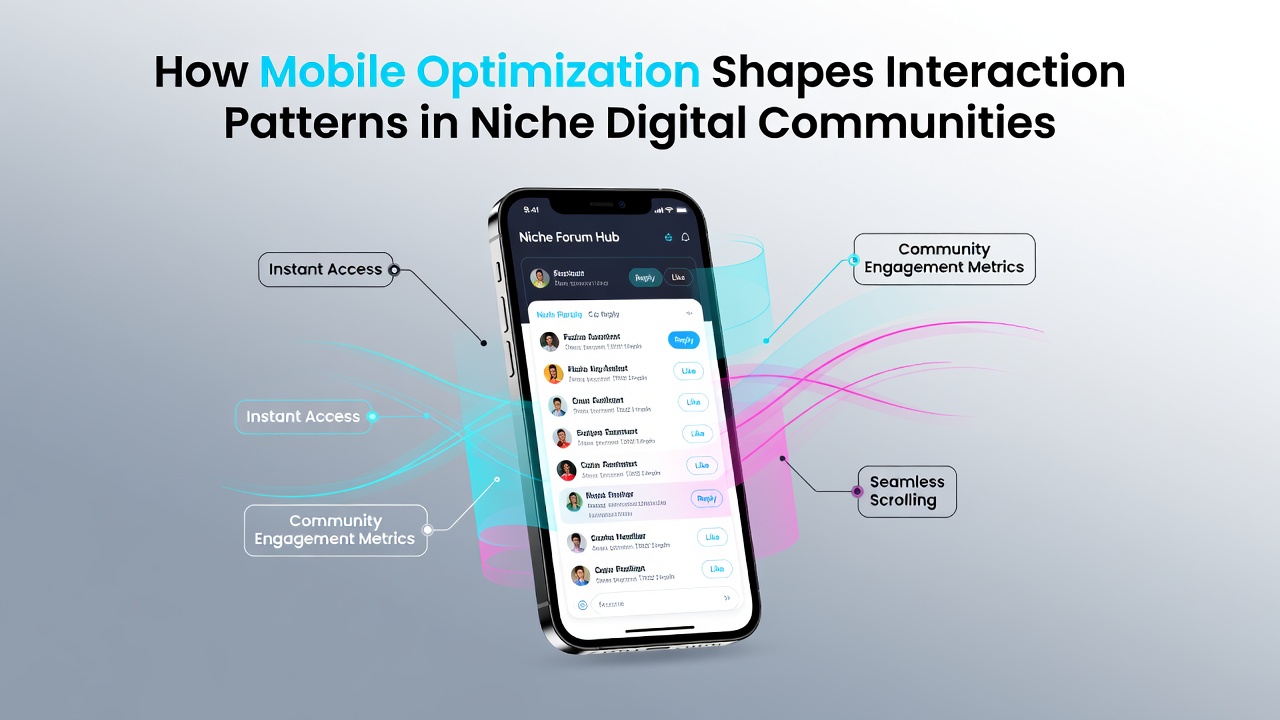
Sage Butler · 11 September 2026
How Mobile Optimization Shapes Interaction Patterns in Niche Digital Communities
Researchers have documented steady growth in mobile access to specialized online groups since the early 2020s, and data from multiple regions continues to track how these devices alter the way participants connect. Observers note that communities built around hobbies, professional interests, or cultural topics now see the majority of their activity through smartphones and tablets rather than desktop browsers. This shift influences everything from post length to response timing because mobile interfaces prioritize quick loading and touch-based navigation.
Access Patterns and Device Preferences
Studies conducted across North America and Europe show that users in niche forums and Discord servers spend longer cumulative time on mobile apps than on web versions, even when the same content appears on both platforms. Those who track engagement metrics report higher session frequency during commuting hours and evening downtime, periods when desktop access remains limited. As of September 2026, reports from the Australian Bureau of Statistics indicate that over 78 percent of adults in hobby-focused online groups rely primarily on mobile connections for daily participation.
Design choices that reduce page weight and simplify menus encourage members to check updates more often, which in turn compresses the average interval between contributions. People who once waited until evening to log in from a computer now reply within minutes of receiving push notifications. This change produces denser conversation threads, yet individual messages tend to stay shorter because typing on small screens favors brevity.
Content Formats and Visual Emphasis
Communities that optimized images and short video clips for vertical screens report stronger retention rates than those maintaining desktop-first layouts. Participants upload photos or reaction videos more readily when the upload process requires fewer steps on a phone. Data collected by the Pew Research Center reveals that visual posts in mobile-optimized hobby groups receive 40 percent more replies on average than text-only entries during the same observation windows.
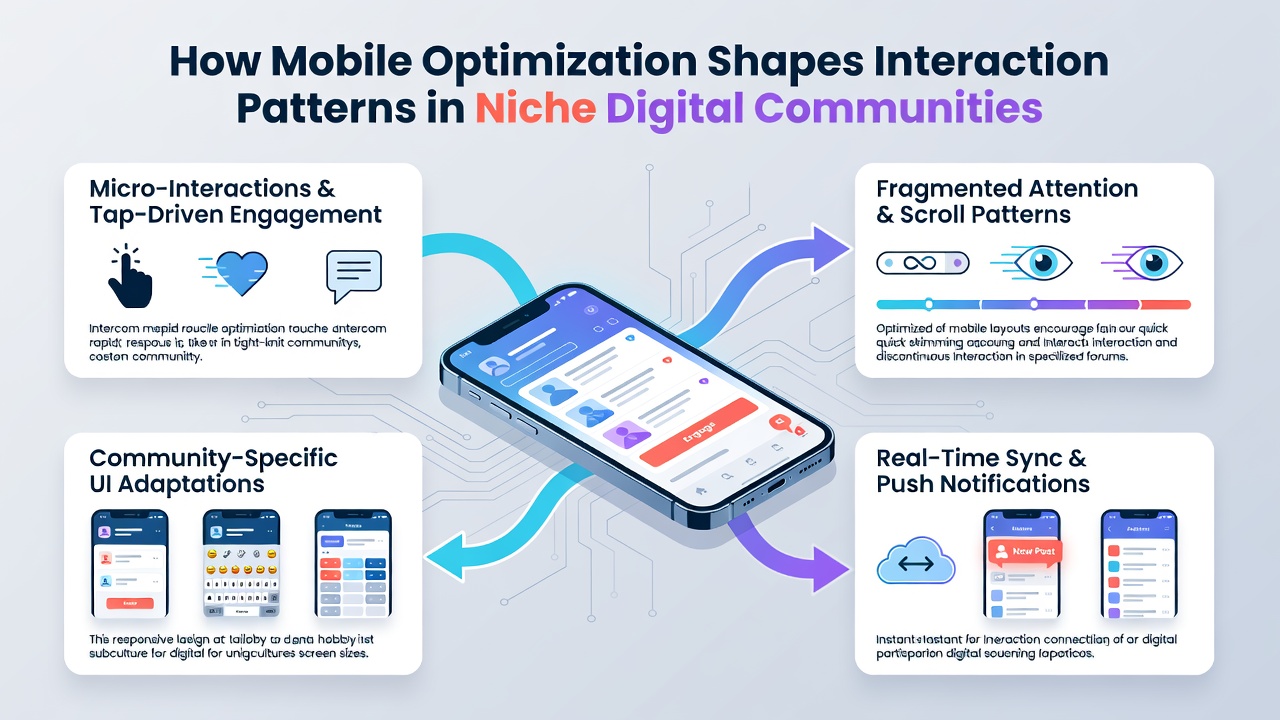
Text formatting also adapts. Bullet points, numbered lists, and emoji reactions appear more frequently because they render cleanly on smaller displays and require minimal scrolling. Moderators in several gaming and craft communities have adjusted character limits downward to match the new posting habits, and these adjustments correlate with steadier daily activity rather than bursts of long-form content.
Real-Time Interaction and Notification Dynamics
Push notifications tied to mobile optimization drive immediate responses in time-sensitive discussions such as live event commentary or breaking hobby news. Observers tracking server logs note that optimized communities experience reply clusters within the first ten minutes after a notification, compared with longer lags in non-optimized spaces. This pattern holds across regions tracked by Eurostat digital usage surveys, where similar timing shifts appear in both hobby and professional niche groups.
Members who enable location-based features gain additional context, such as nearby meetups announced only to users within a set radius. These features increase in-person follow-ups from digital conversations, yet they also raise questions about privacy settings that platform operators continue to refine through iterative updates.
Challenges for Moderation and Community Health
Shorter attention windows on mobile devices place new demands on moderation teams. Automated filters that flag repeated phrases or rapid posting sequences have become standard in many groups because quick-tap replies can escalate disputes faster than longer desktop sessions. Research teams at several universities have begun comparing toxicity rates before and after mobile redesigns, and preliminary figures suggest that visible moderation actions must appear within tighter timeframes to maintain trust.
Accessibility features receive parallel attention. Screen reader compatibility and adjustable text sizes help retain members who previously encountered barriers on smaller screens. Communities that implemented these elements early report slower but more consistent membership growth across demographic segments.
Conclusion
Mobile optimization continues to recalibrate the rhythm and texture of exchanges inside specialized digital spaces. Data from government statistical agencies and academic sources alike show that access frequency rises, message length shortens, and visual elements gain prominence when interfaces align with handheld use. These measurable adjustments appear consistently across hobby, professional, and cultural communities, shaping how participants locate one another and sustain ongoing conversations without requiring major changes in underlying platform architecture.