Avery Butler · 23 October 2026
Navigating Cross-Device Sync Challenges in Evolving Note Ecosystems for Distributed Teams
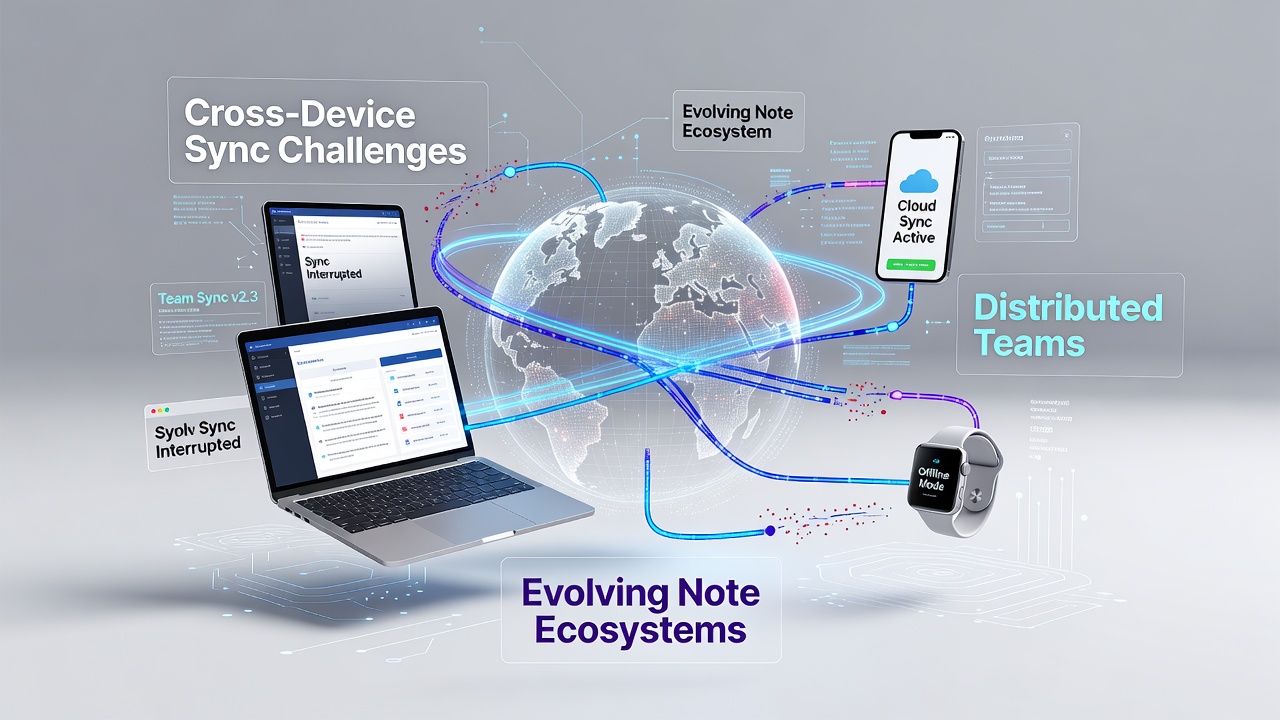
Distributed teams depend on note ecosystems that stretch across smartphones, tablets, laptops, and desktops, yet maintaining consistent data across these platforms remains complex as software updates and new features continue to reshape how information flows. In October 2026, industry observers noted increased reports of sync delays during peak collaboration hours, particularly when teams in different time zones edited the same documents simultaneously.
Core Technical Barriers in Multi-Device Environments
Latency arises when network conditions vary between locations, and note applications must reconcile changes made offline with those entered while connected, which creates conflicts that automated systems resolve through timestamps or user intervention. Researchers at academic institutions have documented cases where version mismatches led to overwritten sections in shared project notes, forcing teams to reconstruct content from backup copies stored on separate servers.
Security protocols add another layer because encryption keys must sync without exposing sensitive data during transfer, and compliance requirements differ by region, which means developers implement region-specific handling that sometimes fragments the user experience. Data from government agencies in Canada and Australia shows that organizations handling cross-border projects encounter higher rates of sync interruptions when regulatory standards require additional verification steps before files update across devices.
Platform Evolution and Its Impact on Team Workflows
Note ecosystems have incorporated artificial intelligence features for auto-tagging and summarization, but these additions demand greater processing power and stable connections, which leaves users on older hardware or intermittent networks at a disadvantage. Observers note that when platforms roll out real-time collaboration modules, legacy sync engines struggle to keep pace, resulting in temporary divergence between what one team member sees and what appears on another person's screen.

Integration with third-party tools such as calendars and task managers further complicates matters because each connection point introduces potential points of failure during data exchange. Studies from European research centers indicate that teams using four or more integrated services experience sync failures 37 percent more often than those limiting connections to core note functions alone.
Strategies Teams Use to Maintain Consistency
Administrators often establish designated sync windows during low-traffic periods to reduce collision risks, while individuals adopt habits like completing major edits on a single device before switching contexts. Some organizations deploy monitoring dashboards that flag discrepancies within minutes, allowing quick manual reconciliation before issues compound across the ecosystem.
Training programs teach users to recognize early signs of sync problems, such as duplicate entries or missing attachments, and to trigger manual refreshes rather than waiting for automatic processes. Reports from the Australian Digital Health Agency highlight how structured user education reduced reported sync incidents by nearly a quarter in pilot programs conducted across distributed healthcare teams.
Emerging Developments Expected Through Late 2026
Engineers continue refining conflict-resolution algorithms that prioritize contextual relevance over simple timestamps, and early tests suggest these approaches cut manual intervention needs substantially. At the same time, edge computing nodes placed closer to user locations promise lower latency for initial sync handshakes, though widespread deployment remains gradual.
Regulatory bodies in the European Union have begun examining data residency rules that affect how note platforms cache information across borders, and similar discussions appear in policy documents from North American agencies. These frameworks will likely influence future architecture decisions as providers balance performance gains against compliance obligations.
Conclusion
Cross-device synchronization in modern note ecosystems presents ongoing technical and procedural hurdles for distributed teams, yet measurable progress occurs through iterative platform improvements and targeted operational adjustments. Continued monitoring of performance metrics and regulatory shifts will shape how these systems evolve in the months ahead.