David Keller · 6 November 2026
What User Analytics Reveal About Preference Trends in Multi-Platform Knowledge Sharing Environments
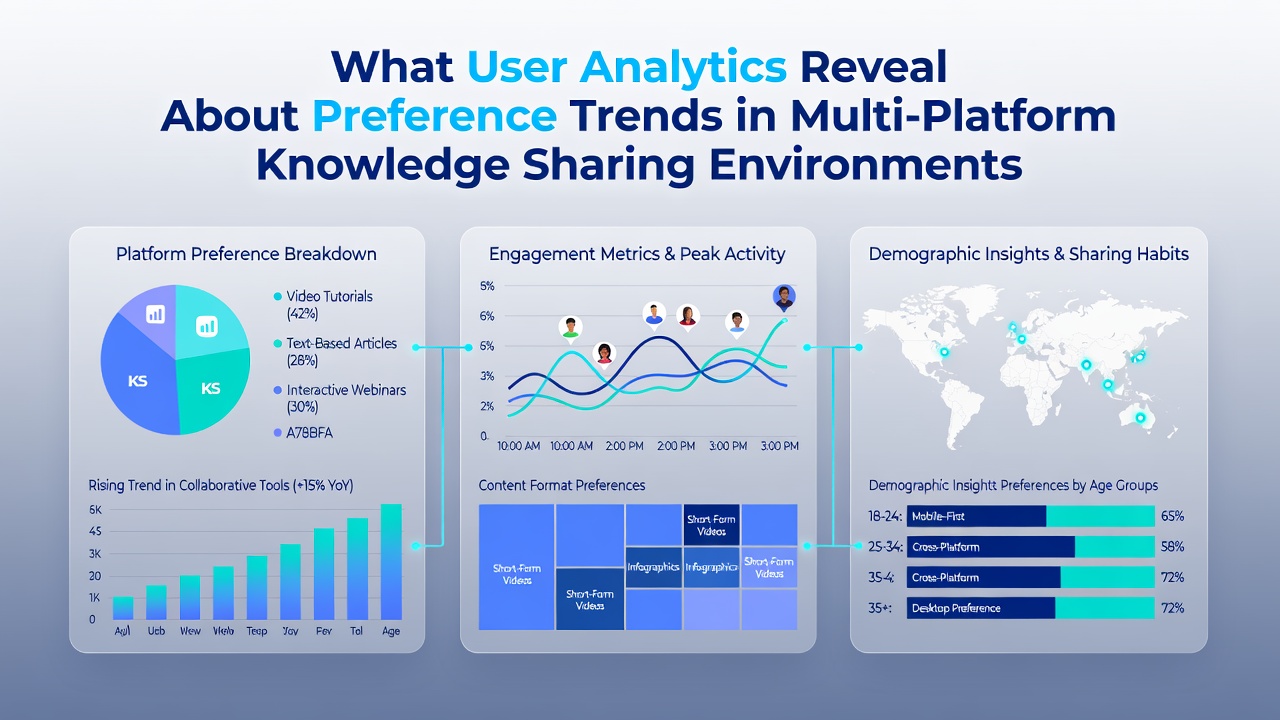
Multi-platform knowledge sharing environments have grown into complex ecosystems where users move between web interfaces, mobile applications, and desktop clients to access and contribute information, while analytics tools track these movements to identify clear preference patterns that emerge over time. Data from large-scale tracking systems shows users favor mobile access for quick lookups and updates during the workday, yet they shift to desktop platforms when handling longer collaborative editing sessions that require detailed navigation and multiple windows open simultaneously.
Platform Usage Patterns Across Devices
Researchers tracking millions of interactions throughout 2025 and into November 2026 have documented a consistent split where mobile sessions account for shorter but more frequent visits, whereas desktop usage concentrates on deeper content creation and revision cycles. Studies from academic institutions indicate that cross-device handoffs occur most often during evening hours, when individuals start a note or discussion thread on one device and continue it later on another, creating measurable trails that analytics platforms now map with increasing precision.
European Commission reports on digital collaboration highlight how users in professional settings prefer integrated environments that allow seamless transitions without losing context, and similar patterns appear in data collected by Australian government digital economy surveys that monitor public sector knowledge platforms. These findings reveal that preference for unified logins and synchronized states has strengthened steadily, reducing friction that once led to duplicated efforts or abandoned contributions.
Content Format and Engagement Trends
Analytics dashboards capture rising engagement with mixed media formats, where text remains dominant but video snippets and interactive diagrams draw higher completion rates when embedded within shared documents. Observers note that users allocate more time to content tagged with version histories and comment threads, suggesting a preference for transparent evolution of ideas rather than static posts that offer no visible lineage.
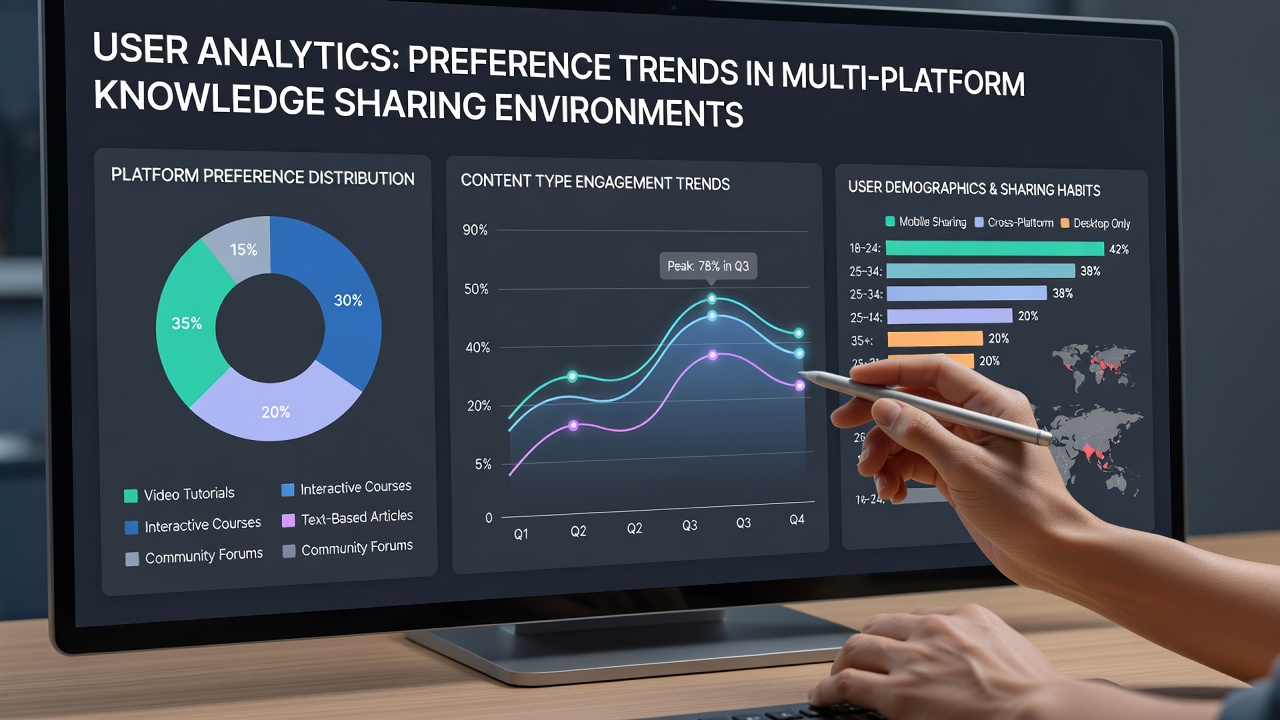
One analysis of interaction logs across enterprise tools found that threaded discussions receive sustained attention over several days, while standalone files see quick initial views followed by rapid drop-off unless they connect to ongoing conversations. Data indicates demographic variations as well, with younger cohorts favoring real-time chat integrations and older groups showing stronger retention on structured wiki-style pages that emphasize searchability and archival access.
Cross-Platform Behavior and Timing Insights
Timing data collected from global user bases demonstrates peak activity windows that differ by platform, with mobile traffic spiking during commutes and desktop activity rising sharply after standard business hours in multiple time zones. Analysts observe that users who maintain consistent habits across devices generate richer datasets, allowing platforms to refine recommendation engines that surface relevant material based on prior cross-device patterns rather than isolated sessions.
Industry reports from research organizations such as those affiliated with European statistical agencies confirm that preference for notification customization has increased, as individuals seek control over which updates reach them on each device to avoid overload while staying informed about collaborative changes.
Demographic and Regional Variations
Regional datasets compiled through late 2026 show subtle differences in how knowledge workers in North America versus Asia-Pacific regions structure their multi-platform routines, with the former leaning toward asynchronous updates and the latter displaying higher rates of simultaneous multi-device use during overlapping work periods. University-led studies further break down these trends by role, revealing that managers spend more time reviewing aggregated analytics views while contributors focus on direct editing interfaces regardless of device.
Figures from Australian Bureau of Statistics digital participation research align with global observations that users increasingly value export and import flexibility, allowing content created in one environment to migrate cleanly into another without reformatting or loss of metadata.
Conclusion
Collectively, the analytics paint a picture of adaptable users who select platforms according to immediate task demands and context, driving ongoing development of tools that anticipate these shifts through improved synchronization and format versatility. Continued monitoring through 2026 and beyond will likely refine these insights further as new features emerge and usage data accumulates across expanding user bases.